

Protection for demanding industrial work environments. Industrial epoxy flooring gives hard-working concrete a durable, purpose-built finish for facilities that face heavy loads, impacts, spills, frequent cleaning, or regular equipment traffic.
Plan an Industrial Floor System
We evaluate your concrete, operating conditions, and cleaning needs to recommend a practical, durable flooring designed just for your needs.
What is Industrial Epoxy Flooring?
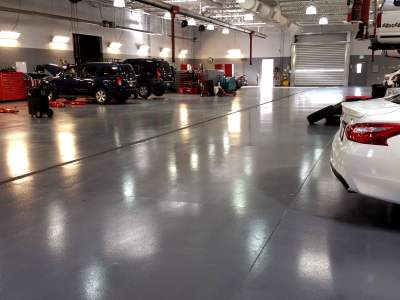 Industrial epoxy flooring is a high-performance resin flooring system installed over prepared concrete. It forms a continuous protective layer that helps the concrete handle demanding daily use while giving the facility a cleaner, more finished surface.
These systems are designed around the conditions in the space. That may include forklift traffic, dropped tools, chemical exposure, repeated wash-down, oil and fluid spills, temperature changes, or a need for clear work-zone markings. Depending on the environment, an industrial floor may use a standard epoxy build, a thicker system, added texture, or another compatible material chosen for the job.
Built for Demanding Facilities
Industrial epoxy flooring works where plain concrete needs better protection and a more manageable finish.
- Manufacturing plants and production areas
- Warehouses, loading zones, and distribution facilities
- Equipment rooms, maintenance shops, and service bays
- Assembly lines, fabrication spaces, and machine areas
- Food-related support spaces and wash-down work areas
- Utility buildings, process rooms, and industrial workshops
Designed Around Real Conditions
Industrial flooring needs to do more than improve appearance. It needs to support the work happening on top of it. West Coast Epoxy considers the condition of your concrete, the weight and frequency of traffic, likely contaminants, cleaning practices, and the desired working environment before recommending a system. Where heavy equipment, repeated impacts, or an added layer of protection is a concern, trowel-grade epoxy flooring may be a better fit. In facilities with frequent temperature changes, wet processes, or more aggressive conditions, urethane concrete flooring may be worth considering.
A system can be tailored with:
- Thicker build options for demanding traffic and impact exposure
- Protective finishes suited to oils, fluids, and routine workplace spills
- Textured topcoats for areas where stronger footing is important
- Color, striping, and markings to define traffic lanes or work zones
- Wall-edge protection for spaces that require frequent mopping or wash-down
How Installation Works
A reliable industrial floor starts with careful planning and proper concrete preparation.
- We assess the existing concrete, operating conditions, traffic patterns, and performance needs of the facility.
- The concrete is cleaned and prepped to create the surface texture needed for bonding.
- Cracks, damaged areas, joints, and moisture concerns are addressed before the flooring system is installed.
- The selected base layer or thicker build system is applied to create the needed level of protection.
- Texture, striping, and protective topcoats are added as needed, followed by appropriate cure time before the area returns to use.
Care and Long-Term Performance
Industrial epoxy flooring performs best when it is cleaned consistently and spills are addressed promptly. Regular sweeping removes abrasive debris that can wear on the surface, while cleaning methods should match the finish and the materials used in the facility. High-use areas may need more attention over time, especially where heavy equipment turns, impacts occur, or liquids are frequently present. Choosing the right system from the start helps your floor stay practical, durable, and easier to maintain through everyday industrial use.
Frequently Asked Questions
These answers can help you plan an industrial epoxy floor around your facility’s real requirements.
How is industrial epoxy flooring different from commercial epoxy flooring?
Industrial epoxy flooring is typically selected for more demanding conditions, such as heavier equipment traffic, frequent impacts, chemical exposure, production activity, or aggressive cleaning routines. Commercial epoxy may be appropriate for offices, retail spaces, and lighter-use areas, while industrial systems are designed around more intensive daily demands.
Can industrial epoxy flooring handle forklifts and rolling equipment?
It can, provided the flooring system is designed for the equipment, load levels, travel paths, and condition of the concrete. Areas with frequent forklift movement, pallet jacks, or other rolling equipment may need a thicker or more durable build than lower-traffic work areas.
Should an industrial epoxy floor have a textured finish?
That depends on how the space is used. A smoother floor may be easier to clean in dry areas, while a textured finish can provide more traction where water, oils, or routine spills are present. West Coast Epoxy can help balance cleaning needs with the desired surface feel for industrial epoxy flooring in Sacramento and Northern California.
What if the existing concrete has cracks or moisture issues?
Cracks, damaged concrete, and moisture conditions should be evaluated before any epoxy system is installed. Addressing these concerns early helps determine the right preparation steps and reduces the risk of problems affecting the finished floor. When moisture is a concern, concrete moisture remediation may be part of the recommended approach.
When should a facility consider coved flooring?
Coved flooring is useful where liquids, wash-down, or frequent cleaning reach the wall edges. It continues the floor finish up the base of the wall, creating a smoother floor-to-wall transition that is easier to clean and helps protect lower wall areas. Learn more about coved flooring systems for industrial spaces with these needs.
Discuss Your Facility Floor
Contact us to discuss your facility, concrete condition, and the performance needs of your industrial floor.